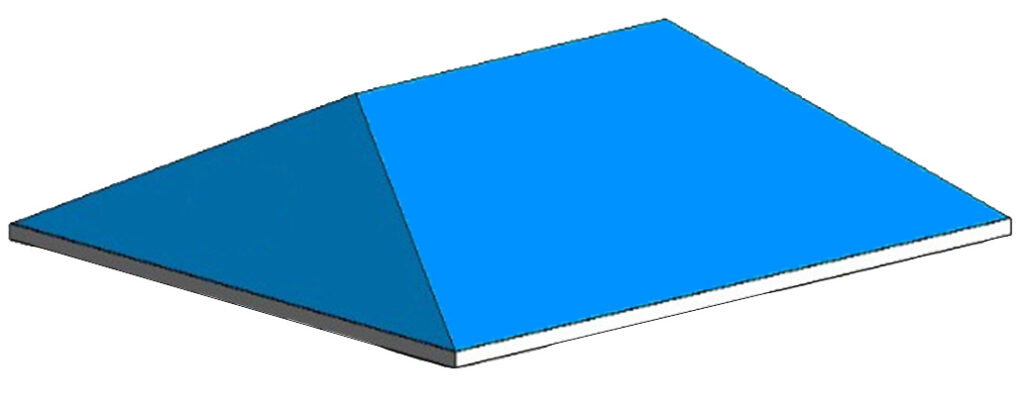
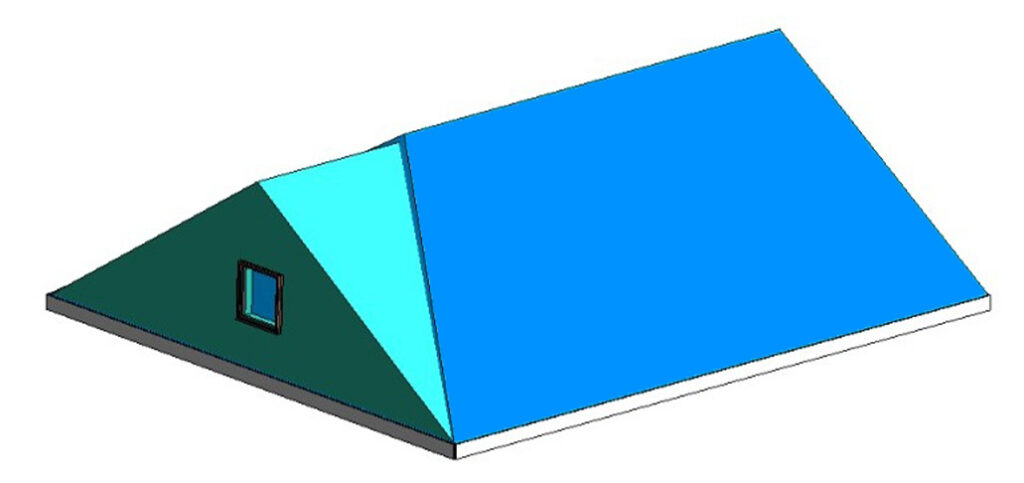
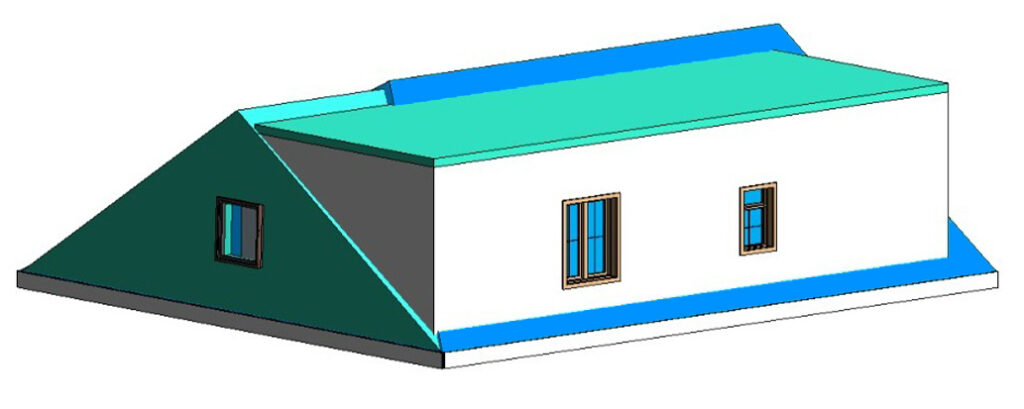
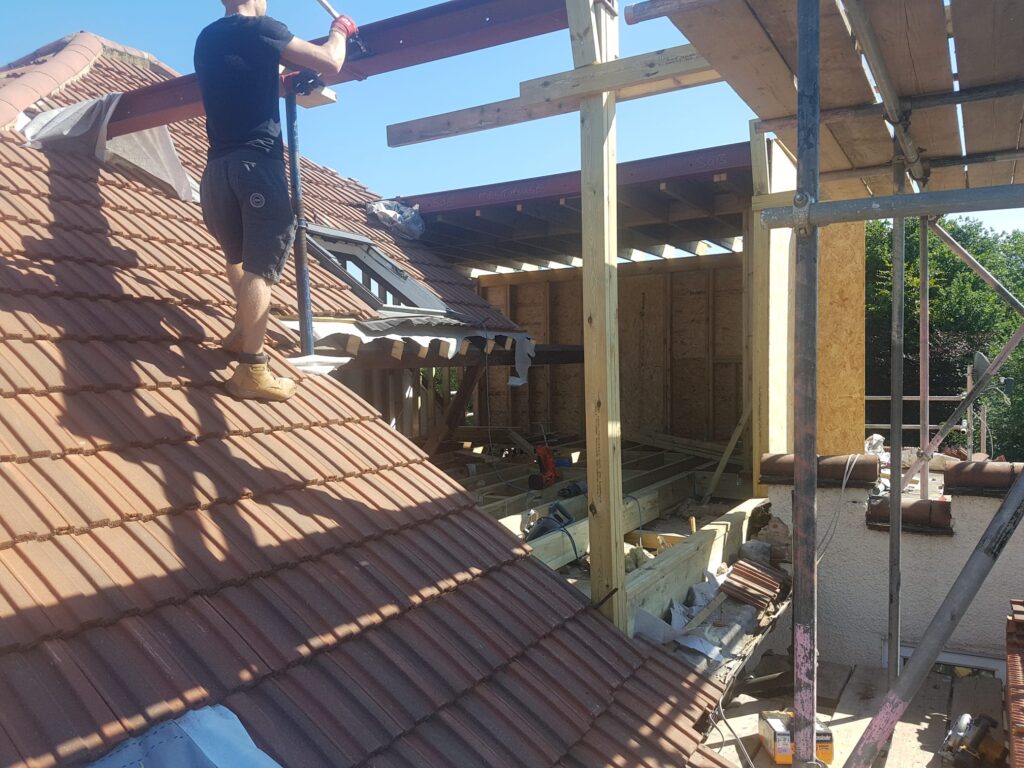
A hip to gable loft conversion is a type of loft conversion that involves making alterations to the sloping roof of a property. The conversion is typically done on properties that have a hipped roof, which is a roof with a sloping shape on all sides. In a hip to gable loft conversion, the existing sloping hip roof is extended vertically to create a gable end, which provides more internal space and headroom in the loft.
The conversion involves removing the sloping roof section and replacing it with a vertical wall, which is then extended upwards to form a new gable end. This creates a much larger space in the loft, which can then be used for a variety of purposes, such as an additional bedroom, home office, or playroom.
They can be a great way to add significant value and extra space to a property without having to move house.
The time it takes to complete a hip to gable loft conversion can vary depending on factors such as the size of the conversion and the complexity of the project. However, on average, a hip to gable loft conversion can take anywhere from 8 to 12 weeks to complete.
In most cases, a hip to gable loft conversion falls under permitted development and does not require planning permission. However, if the property is in a conservation area or a listed building, planning permission may be required. However, it’s always advisable to check with your local planning authority to confirm.
No, a hip to gable loft conversion is only suitable for properties with a hipped roof, which is a roof with a sloping shape on all sides.
The cost of a hip to gable loft conversion can vary depending on factors such as the size of the property, the materials used, and the complexity of the project. A Hip to Gable loft conversion typically starts at around £55,000. Please contact us today for an accurate quote.
Yes, a hip to gable loft conversion can be used for a variety of purposes, such as an additional bedroom, home office, or playroom.
Yes, a hip to gable loft conversion can add significant value to your home, as it increases the amount of usable living space.